Youth Basketball Inbounds Plays
Although the inbounds play is thought of as just inbounding the ball safely, it is more important to think of the inbounds play as an opportunity to score a quick basket. Scoring points off inbounds plays can add up throughout the course of the game. Inbounds plays must be practiced and executed properly in practice in order for the play to work in a game. Remember, the younger players need repetition and review more than the older players.
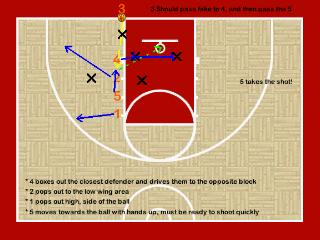 |
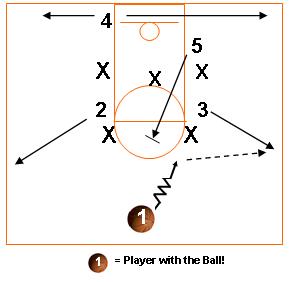 |
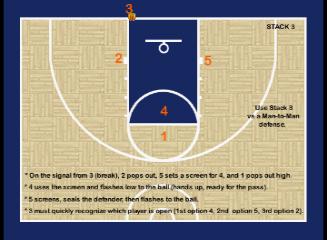 |
Another important part of youth basketball inbounds plays is how to “defend” against them – this and other important information is covered in our new AVCSS Basketball download publication “Inbounds Plays for Youth Basketball”
Youth Basketball Inbounds Plays – Teaching Points, Notes
1. It is very important for players to “box out” properly during an inbounds play if that is part of their assignment, boxing out is crucial to the success of the play!
2. Pass Fakes are a must! Players passing in the ball should pass fake to confuse the defense. Pass fakes “freeze” defenders and opens up areas to the offensive players.
3. Younger players should be given a play book or an assignment that entails writing a report or drawing the play over again to assist them with memorizing the plays.
4. Whenever the referee hands the basketball to a player (the player that will be passing in the ball) that player cannot move from that designated spot.
5. Inbounds plays should be thought of as “opportunities for a quick score.”
6. It is extremely important that your best passer is the player that is passing in the ball.
Don’t advertise the play!
7. Players should not “advertise” where they are going to go! Fake left, go right – deceive the defense and don’t show defenders which direction you are going to go to. Don’t make it easy for the defense to figure out where you are going.
8. Players should read the defense. If the defense is standing on a spot that they usually go to, the player must either “fight for position” or move to an open area.
9. 1st priority with an inbound play is to score, the 2nd priority is to inbound the ball safely – without turning the ball over to the other team.
10. Players should always be looking for the ball! All screens, cuts, flashes, etc, should be performed facing the ball if at all possible. Always expect the ball!
11. The 1 is usually the “Safety” player and their main function is to be the first player back on defense if the inbounds play is busted, etc. The 1 must understand when the inbounds play has failed, and when its time to “go to the ball” and set up the offense.
12. Make sure the player passing in the ball stays at least 2-3 steps back from the out of bounds line to give themselves additional room to pass the ball into play.
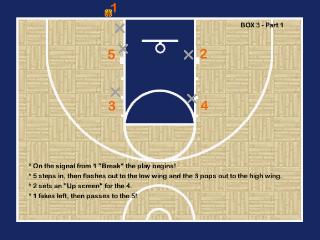
Inbound Sets
Stack, Box, Sideline, and Flat sets. Here are examples of different inbound play sets used.
Stack #2 – Basic Inbounds Play
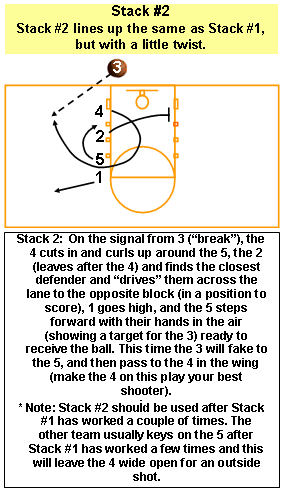
Stack #2 Inbounds Play – Handout
IMPORTANT NOTE: Coaches must make sure you practice inbounds plays from both sides of the paint until the players are comfortable running the plays. Make sure that your players understand the 1st option of the inbounds plays as well as the 2nd and 3rd options.
Box #2 – Basic Inbounds Play
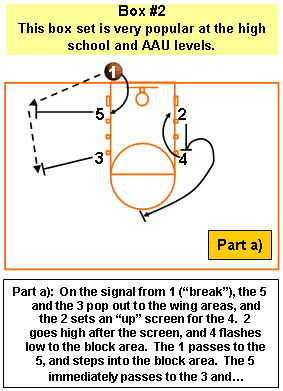
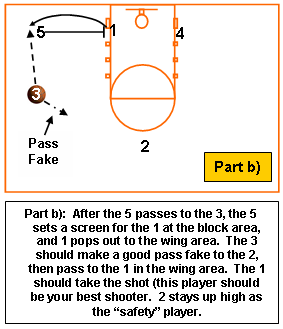
Side Line Play – Basic Inbounds Play
If your opponent is in full court Man-to-Man Defense, and your team has the opportunity to inbound the ball at the “hash mark” area, then this is the play to run for an easy basket!
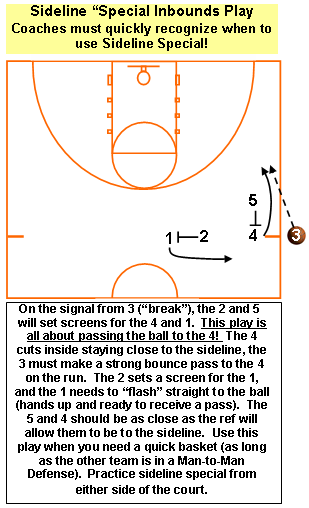
Sideline High Inbounds Play for Youth Basketball
“Flat” Sets – Inbounds Plays
If you have a tall post player or a player that can jump then you should look at the “Flat” inbounds plays. When executed properly, these playsy are very hard to defend!
Defending Inbounds Plays / Notes
a) The number 1 rule to remember when the other team is setting up an inbounds play under their basket! Always Use a Zone Defense! Teams take a big chance whenever they run a Man-to-Man defense vs. an inbounds play under their opponent’s basket. Using Man-to-Man defense – it will only take one good screen for your opponent to score an easy basket!
b) A very important part of a basketball game that most coaches neglect to practice is how to defend the inbounds play.
c) Since most inbounds plays are all basically the same (to some extent), it would be very beneficial to practice defense against them. Coaches must take the time to teach their players how to defend against youth basketball inbounds plays. Or it could mean easy baskets for your opponent.
Defending Inbounds Plays – Handout
WANT MORE?
Check out these Inbounds Play Videos
Check out our new AVCSS Basketball download publication “Inbounds Plays for Youth Basketball”
Lots of valuable information on Inbounds Plays, Defending the inbounds play, Diagrams, and Video Clips to help bring the information to life.

Youth Basketball Inbounds Plays
Here are some Free Basketball Court Diagrams
